Featured Reflections #1
Welcome to Blythe's reflections, where we share insights and inspiration. This section highlights our most cherished posts, offering a glimpse into our passion for early childhood education and our journey in this vital field.
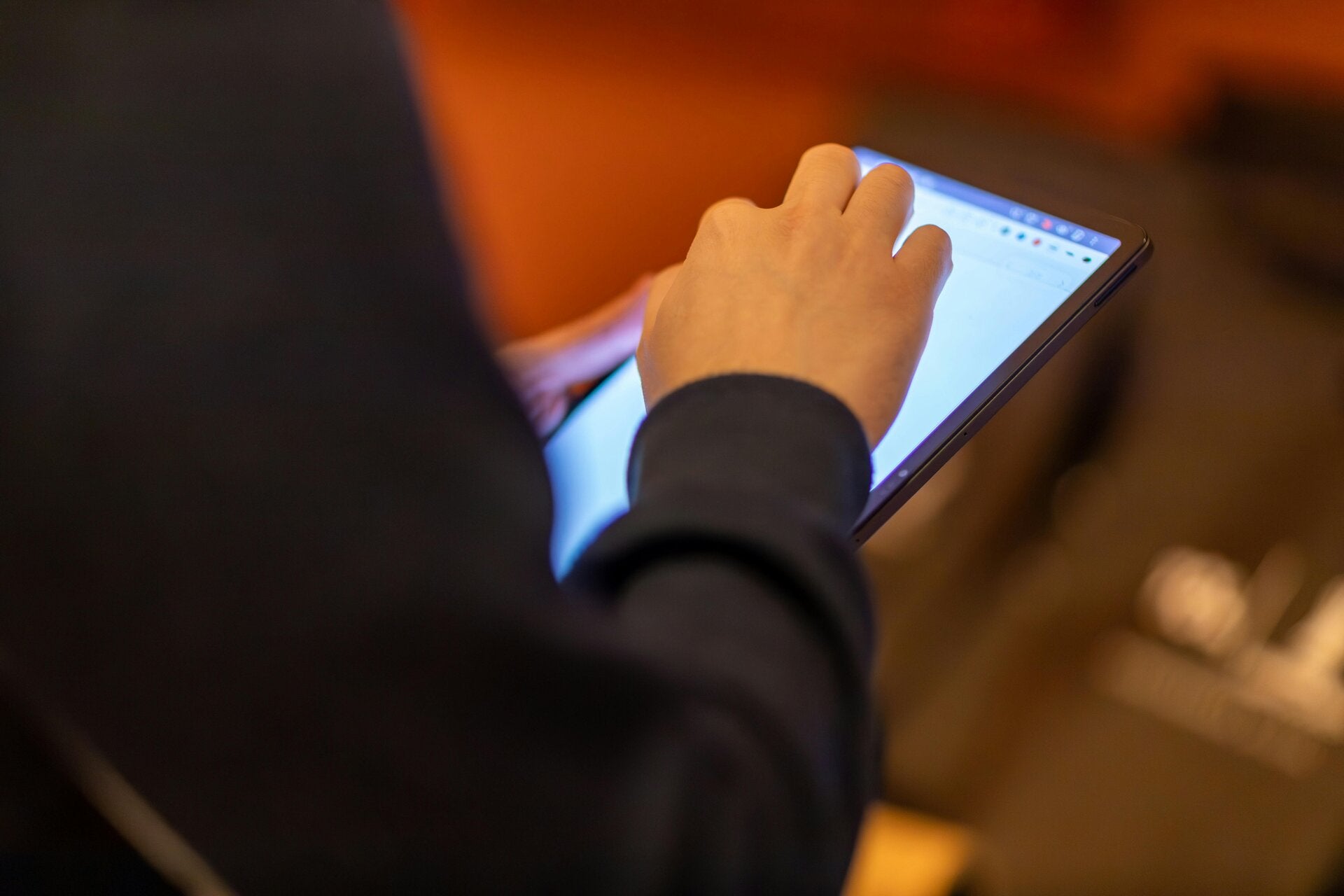
The impact of technology on education
Lately, in the media there has been a focus on the possible discrepancies between the turn of the century expectations for digital learning and the current investigations into the results. For the last seven or eight years teaching professionals, neuroscientists and parents have been noticing a decline in reading ability. As of 2026 there has been agitation and general concern at reports such as The New York Post article which stated a statement from neuroscientist Dr Cooney “Gen Z underperformed on basically every cognitive measure, from basic attention, memory, literacy, numeracy, executive function and general IQ”. Numerous studies over the last eight years have shown one of the possible reasons for this decline.
My own experience working with with 0-5 year old children echoes this. I have observed babies under twelve months fixating on the prescence of an iPad, crawling towards them and showing scrolling skills. For slightly older young learners this is exhibited by an obsession with gaming over print, and a lessening ability to focus on school readiness activities. This is particularly obvious when I am trying to teach literacy to neurodiverse children. My feelings about digital technology have become problematic.
Evaluation of the problem comes through various studies in the last couple of years. A pointed question by The Guardian in 2024 asks what does it mean that schools have gone digital. It answers that, in a USA study the results found that text comprehension skills of thirteen year old students had declined by an average of four points. Neuroscientists from Columbia university had found after studying brain responses that shallow reading was observed when some students read on a screen. Anne Mangan states in “Reading both expository and complex texts shows a superiority of retention and comprehension from paper rather than screen texts.”
One exhaustive and wide ranging study (Igor Perez et al 2023) compared reading outcomes in sixteen to eighteen year old students including many outside factors such as SES and gender came up with results that were not definitive but did show there was a slight negative correlation (r=0.06) with digital reading. However, there were some areas that did show significant difference in results between digital and paper options. Poor readers did worse, had poorer recall, less attention and understanding when working with screens than paper versions.
Analysis of various studies by Lidia Altamura (2024) states that digital devices can enhance engagement because of interaction, offer the ability to find recent material and improve accessibility to visual modifications. Two meta analyses (with half a million participants from thirty six countries) showed slightly worse reading outcomes.
In conclusion, Altamura’s estimation is interesting - young children who spend ten hours reading books or magazines will exhibit six to eight times higher comprehension levels than those spending the same time reading on digital devices.
My reflection on these studies is that I would expand my use of story and picture books and encourage children to hold the books, turn the pages, see the beginnings and the end of the story.
Add comment
Comments
Great job on your Reflection!! A Strength is that you show strong engagement with current and real world observations especially your work with young children. you clearly explain concerns about declining literacy and attention and you support your ideas with a range of studies. This demonstrates good critical thinking and an understanding that technology can have both benefits and drawbacks.
You should keep using research to support your reflections as this strengthens your argument and shows awareness of broader educational debates. Your connection between studies and your own experience with young learners is very effective so you should continue making these links to show how theory applies in practise.
I suggest to improve try simplifying some of your explanations and focusing on the key points as parts of your reflection feel quite dense. You could also balance your argument by briefly acknowledging situations where digital reading is beneficial. and finally maybe add more specific strategies you would use in practise such as combing screen and print activities to show how you would respond to these concerns in your teaching.
Thanks Hamish !!
Positive Feedback
Your reflection presents a strong and thoughtful discussion about the potential impact of digital technology on reading and literacy development, particularly in early childhood settings. I found your personal observations of young children interacting with iPads especially compelling, as they provided a clear real-world example to support your concerns about attention and engagement. Your use of research studies to explore both the benefits and drawbacks of digital reading also demonstrated strong engagement with current debates about technology in education and helped strengthen your overall argument.
Constructive Feedback
One area that could be improved is the structure of the reflection. At times, the discussion focused heavily on research findings without clearly linking them back to your own professional role or experiences working with young children.
Feedforward
To strengthen future reflections, you could explicitly connect each research point to a practical teaching strategy, such as describing how you might balance screen-based learning with hands-on literacy activities in early childhood classrooms.